
Introducing our 2026 Earth Honoree: Steelhead Trout
Clean It Out, for Steelhead Trout
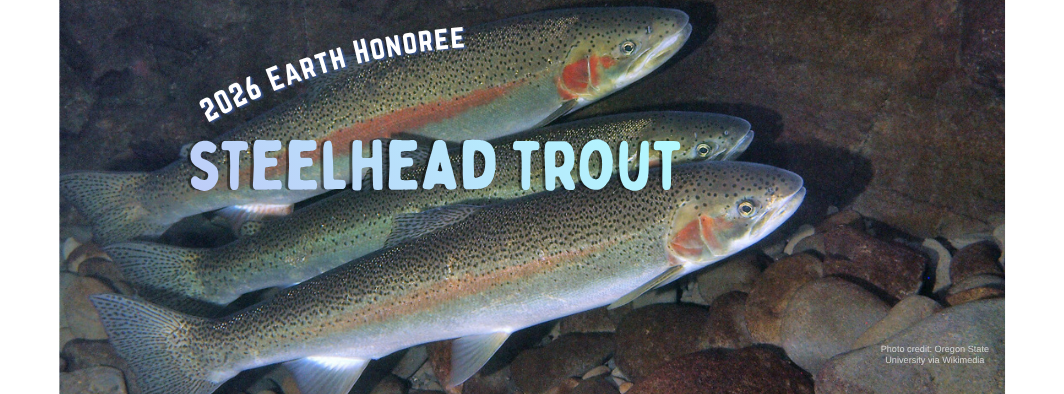
Meet the ecologically and culturally significant Steelhead Trout, our 2026 Earth Honoree. This unique wildlife highlights the interconnectedness between the ocean and our coastal waterways. A fish that can live in freshwater and saltwater? It’s true! Plus, steelhead trout serve as an important representation of our ongoing stewardship at San Pedro Creek in Pacifica.
Starting today, we invite you to take a deep dive into some of our educational information about this impressive aquatic animal. We’ll have more stories throughout the year ahead, in addition to our teacher’s toolkit and assembly programs. On Saturday, April 18, come put your knowledge to the test and celebrate the steelhead trout with us at PBC’s Earth Day and EcoFest 2026. This fun, free, family-friendly event will be hosted at Pacifica State Beach (aka Linda Mar) from 10:30am-1:30pm, with cleanups across 15 different locations from 9am-11am, for those amazing volunteers looking to fully participate in making our impact.
What are steelhead trout?
Steelhead trout are the same species as rainbow trout, Oncorhynchus mykiss. Our local coastal rainbow trout / steelhead are given the additional sub-species classification Oncorhynchus mykiss irideus. Steelhead come to differ from rainbow trout as they leave our rivers and creeks and enter the ocean, transforming in both shape and color!
Unlike sharks or rays, which are cartilaginous fish, steelhead and other types of bony fish have hard skeletons and are covered in flat, smooth scales. This bony structure provides the strength needed for their powerful “leaps” as they navigate past waterfalls and over sandbars to reach their home streams in order to spawn, or reproduce the next generation.
How many steelhead trout are in Northern California?
The populations of steelhead from Orick in Humboldt County down to San Luis Obispo are well below recovery targets. Comparing historical estimates to today, populations may have declined by an estimated 90% throughout California due to habitat loss, pollution, and overfishing.
Climate change also poses a threat to steelhead trout. Warming streams and oceans, as well as reduced stream flow, may lead to reduced overall growth and reproduction rates. Steelhead’s food sources are affected by climate change as well, which can lead to additional food loss and changes in the overall food web. While the native range of O. mykiss is found along the Pacific Coast of North America and a small portion of Eastern Asia, the steelhead trout’s ability to live worldwide demonstrates its adaptability to a variety of temperatures and aquatic habitats.
Steelhead trout fun facts
- Steelhead and rainbow trout are the same species, Oncorhynchus mykiss.
- Steelhead are anadromous, which means they are ocean-going trout, while rainbow trout remain only in freshwater.
- The average age of steelhead trout is 5 years old, but they may live up to 11 years.
- The U.S. Fish & Wildlife Service has seen reports of steelhead weighing up to 55 pounds and growing up to 45 inches long.
- Steelhead are ectothermic, meaning they are cold-blooded.
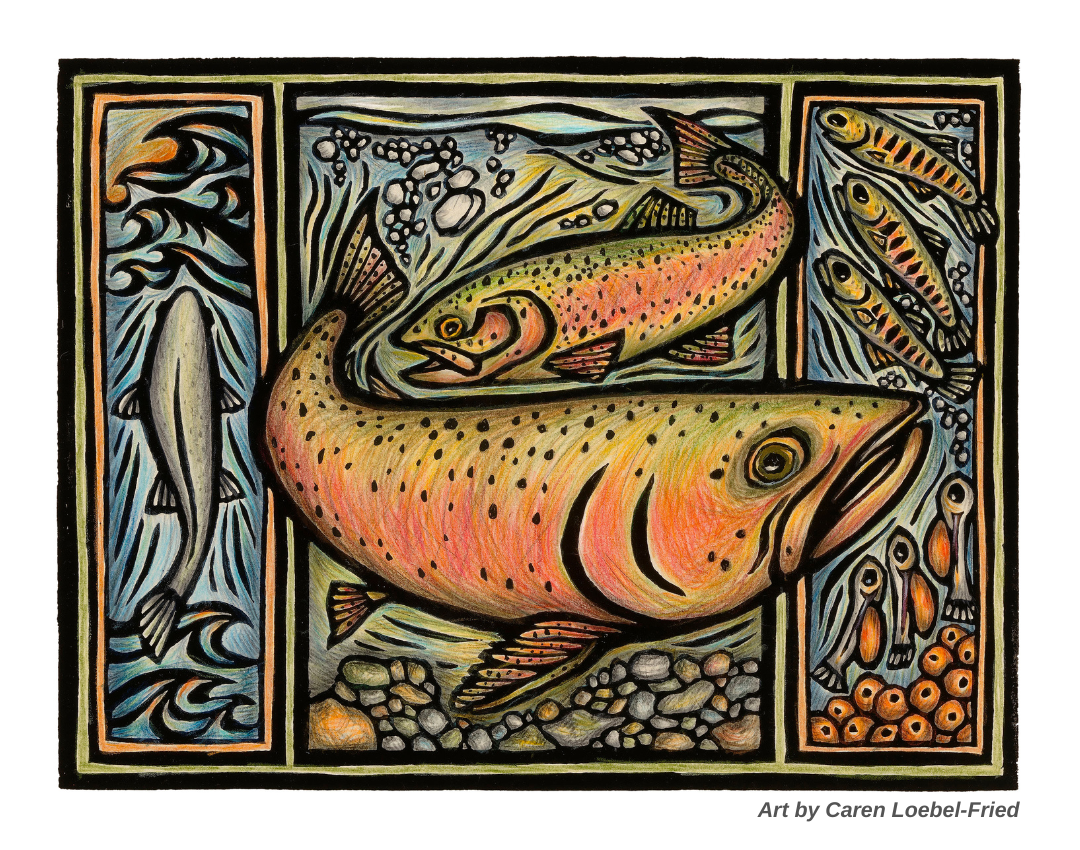
- When preparing for the ocean, juvenile steelhead lose their distinct, dark vertical “parr marks” and develop a sleek, silvery color. This transformation is called smoltification that acts as camouflage in the marine environment.
- Steelhead are iteroparous; they have the unique ability to survive the spawning process of their lifecycle and then return to the ocean before potentially spawning again.
- Steelhead are one of the only salmonids capable of spawning more than once in their lifetime, but the rate of doing so is very low, about 10-20%.
- To help avoid predation, steelhead have evolved coloration that resembles the various shades of water, seen from both above and below perspectives. This is called countershading.
What is the significance of steelhead trout to PBC?
Our San Pedro Creek site is noted as the only stream with documented presence of steelhead trout along a 30-mile coastal stretch between San Francisco and Half Moon Bay. San Pedro Creek is an important home for steelhead trout. Starting life in the spring as eggs, the steelhead trout spend one to two years in San Pedro Creek. When creek levels are high enough, they migrate downstream as smolts undergoing smoltification, eventually crossing Pacifica State Beach and entering the Pacific Ocean to become adults.
While in the ocean, they feed and grow over a few years, then the adult steelhead use their incredible sense of smell and, to a lesser degree, the earth’s magnetic field to find their way back to their home stream. During higher tides and flows, the trout will swim from the ocean across Pacifica State Beach and into the creek’s lower section initially.
The steelhead then migrate up the creek, swimming beneath bridges, up fish ladders, and through our backyards until they reach their preferred high-quality gravel beds, primarily in San Pedro Valley Park. Here, the fish find mates and spawn (lay and fertilize eggs) along the creek’s gravelly bottom. The main creek is about 2.5 miles long and has three main branches:
- The South Fork originates from springs beneath Montara Mountain.
- The Middle Fork is the best section for trout because it flows through open space and has many suitable places for the fish to lay eggs and grow as young fish.
- The North Fork runs through more neighborhoods and is mostly squeezed by pipes and culverts (underground tunnels) and does not support any steelhead trout currently.
San Pedro Creek is vital because it provides a suitable habitat for egg-laying and a place for young steelhead to grow before they travel downstream to the ocean. Currently, the steelhead population in the creek appears to be stable, but threats like pollution from unknown sources and overall water quality issues remain ongoing concerns.
There are multiple organizations paying attention to the steelhead trout, including the San Pedro Creek Watershed Coalition (SPCWC), which works to preserve a healthy ecosystem for the steelhead and the greater watershed in and around San Pedro Creek.
How can you protect the steelhead trout?
Steelhead in the Pacifica region are part of the Central California Coast (CCC) Distinct Population Segment (DPS), which is listed as a threatened species under the federal Endangered Species Act (ESA). Here are five ways to support steelhead populations:
Trash cleanups
Join a community cleanup or go solo and pick up trash in and around neighborhoods, streams, parks, and hiking trails. Be sure to look for tiny microplastics and toxic, chemical-laden cigarette butts. Those butts can be prevented from polluting our water and recycled into picnic tables.
Habitat restoration
Join a community habitat restoration event to help enhance living shoreline and riparian habitats and remove invasive plant species. When possible, let branches fall in the creek to provide in-stream habitat, but be sure to remove any trash that may get trapped and impede water flow.
Scoop the poop
Pet waste pollution reaches our waterways, especially when it rains. Please, always pick up your pet’s droppings and dispose of it properly in a trash receptacle.
Chemical usage
Eliminate use of pesticides and herbicides, use a car wash with greywater treatment, and don’t release chlorine or motor oil into sewer drains, to avoid polluting our connected water ways.
Make a donation
Our annual stewardship and educational programs are only made possible because of generous donors like you. Consider supporting this important work with a tax-deductible gift.
What is an Earth Honoree?
Each fall, PBC’s community of Earth Heroes selects an Earth Honoree as a species we pledge to learn about and share throughout the year. These honorees may be plant, animal, or maybe even fungi too, though we prefer to highlight locals native to the Eastern Pacific Ocean or Northern Pacific Coast.
Our Earth Honoree guides our educational programs, materials, and outreach efforts for the next year. By focusing on a specific species, we connect our volunteers and the community to a tangible representation of the environment. We’ve featured many amazing plants and animals over the years, including kelp, nudibranch, and last year’s brown pelican.
Get in touch with Pacific Beach Coalition to sign up to our mailing list and stay tuned for our steelhead trout teacher’s toolkit, and contact us to schedule a school assembly or group nature activity.
And always remember to Clean It Out, for Steelhead Trout.